

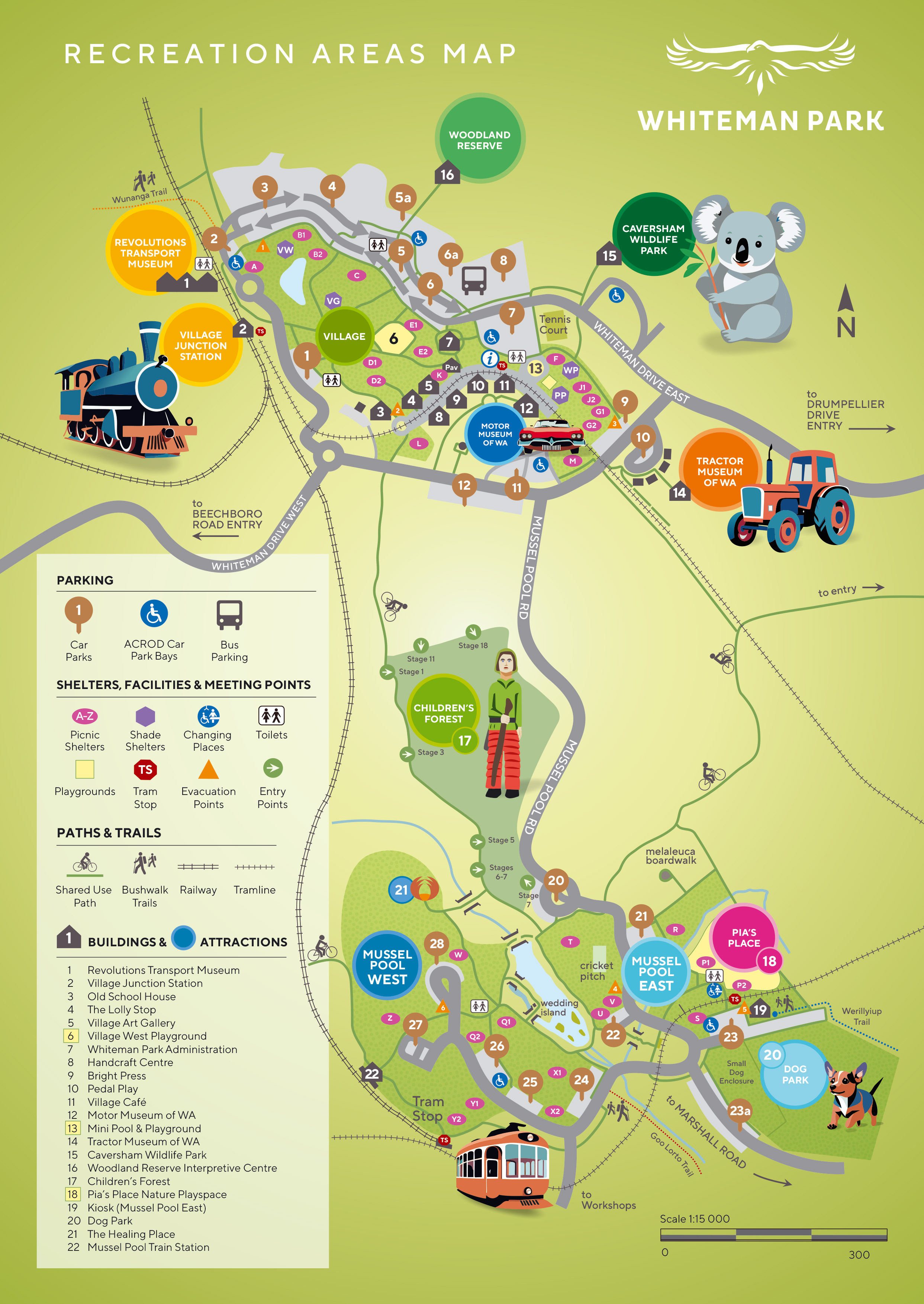


Village Tree Trail
Have you discovered the Village Tree Trail? Grab your map, then take a stroll to learn about some of our key tree species!
A finely dressed stalwart
There are two sheoak species found in the Park's canopy trees: the swamp sheoak (Casuarina obesa) and Fraser's sheoak (Allocasuarina fraseriana).
The most common in Whiteman Park is the Fraser's sheoak and they certainly stand out amongst the all the eucalypts and banksias with their fine needle-like leaves.
Sheoaks like to claim their 'patch', dropping a thick carpet of needles around their trunks that discourages the growth of any competitors nearby!


Western sheoak
These graceful trees dominate our bushland, in comparison to the much rarer swamp sheoak. They are a 'dioecious' species, and are therefore mostly pollinated by the wind, rather than by birds or insects.
Male trees produce hundreds of tiny inflorescences to produce a rusty brown look from May to October. Nearby female trees produce a tiny flower-spike before pollination, which develops into the tell-tale cone that house the species' seeds.
Species profile
| Family | Casuarinaceae |
| Scientific Name | Allocasuarina fraseriana |
| Noongar name | condil |
| Common name | sheoak, Fraser's sheoak, western sheoak |
| Growth | tree |
| Height | 5-15m |
| Flowers | brown May to October |
| Conservation status | Not threatened |
Florabase profile


The female cones are brown when first pollinated and turn grey with age, like these pictured.
The male produces hundreds of tiny 'flowers' that blanket the trees in a brown, rusty look.