

Village Tree Trail
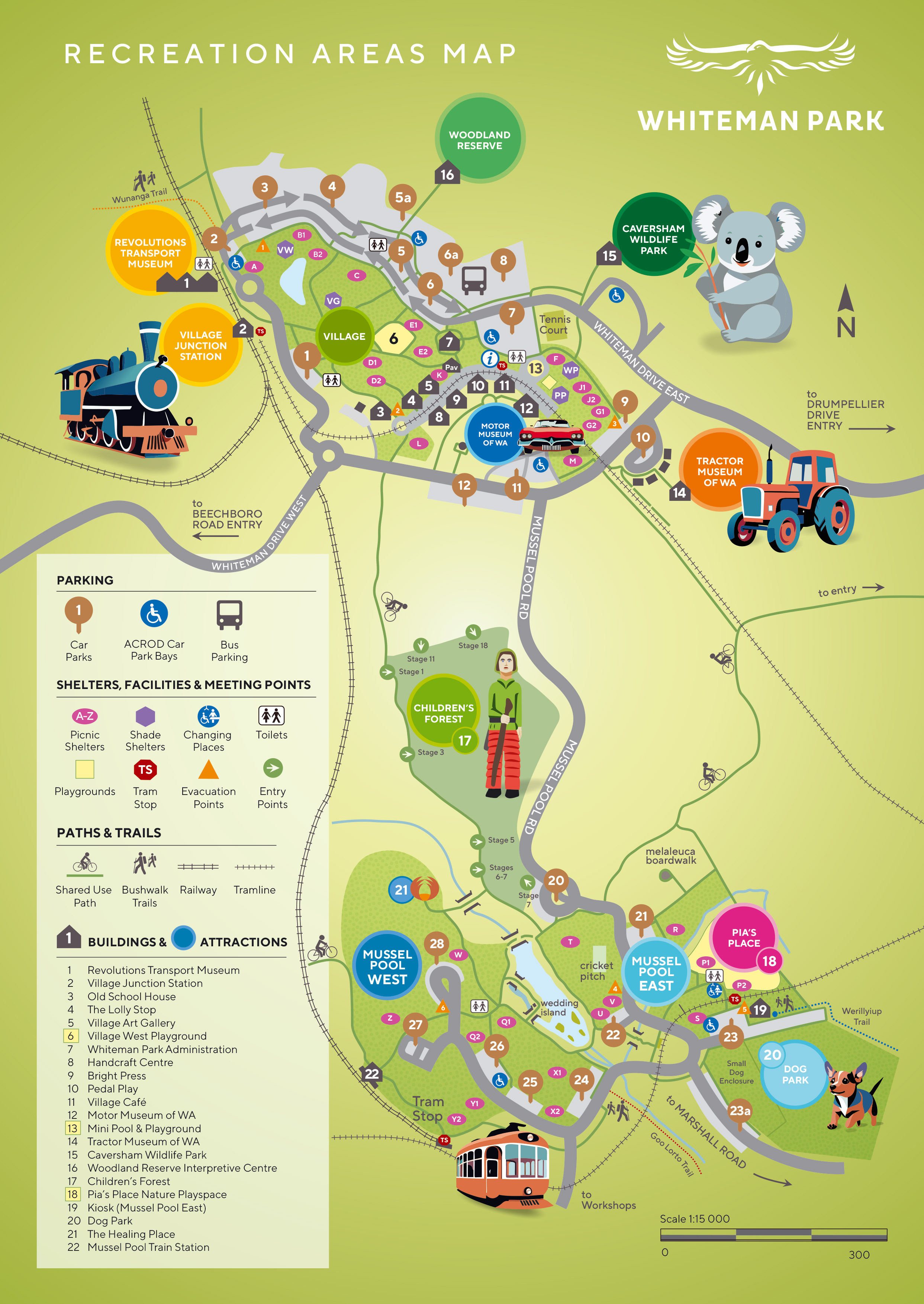
Have you discovered the Village Tree Trail? Grab your map, then take a stroll to learn about some of our key tree species!
The heart of our festive decor
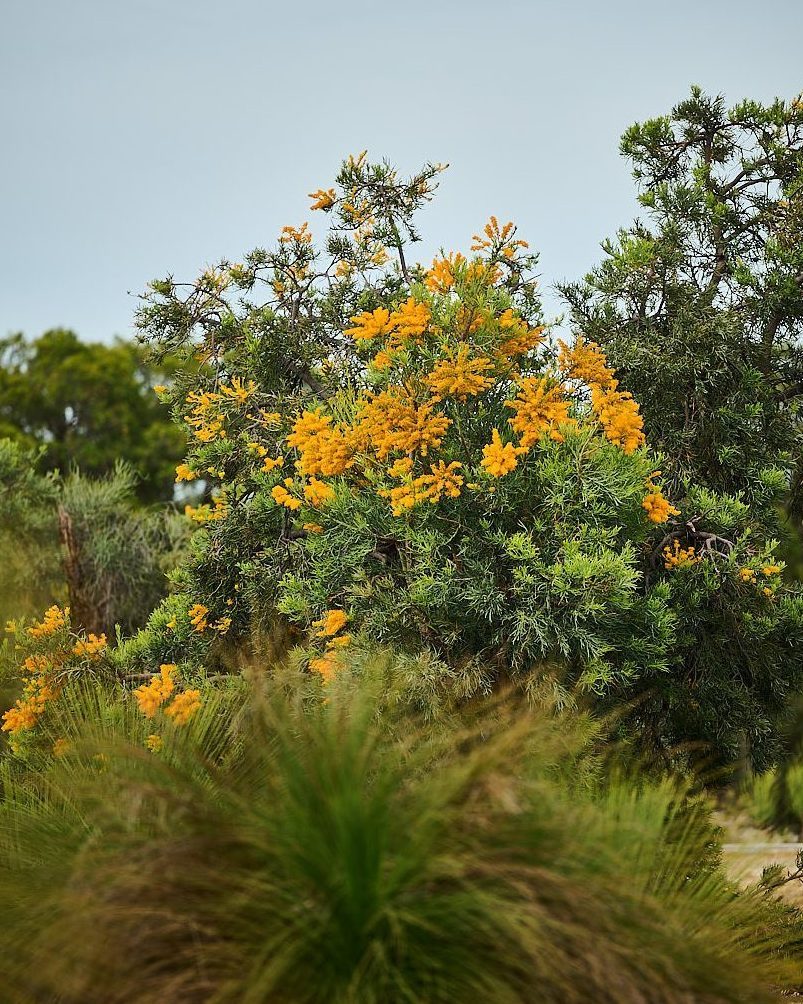
Whiteman Park is home to hundreds of specimens of the fascinating WA Christmas tree.
Known locally by their Noongar name, 'moodjar', these trees are considered sacred to the Noongar people, holding special spiritual significance as the keeper of spirits who have passed. For this reason, it is important to never pick the flowers of this tree, no matter how spectacular we find them to be.
When in flower, the moodjar attracts a host of insectlife and nectar-feeders, as well as a few animals looking to feed on the influx of insects!


Ablaze in fiery colour
These trees bloom in spectacular fashion, with masses of brilliant orange/yellow flowers.
They give the bushland canopy a fiery blanket of colour around the festive season, typically best from November to December. It is because of the timing of these showy blooms that the moodjar got its common name of the 'WA Christmas tree'.


Feeding off others
The moodjar is also believed to be the largest member of the mistletoe family.
It is a hemiparistic tree, meaning it can photosynthesise itself, but also attaches itself to the roots of other trees and vegetation around it to ‘feed’.
The Australian Geographic has a great article about these parasitic Christmas favourites.
Australian Geographic article


Species profile
| Family | Loranthaceae |
| Scientific Name | Nuytsia floribunda |
| Noongar name | Moodjar |
| Common name | WA native Christmas tree |
| Growth | shrub or tree |
| Height | up to 10m |
| Flowers | golden yellow to orange October to January |
| Conservation status | Not threatened |